Leaderboard




Popular Content
Showing content with the highest reputation since 08/17/26 in Posts
-
I have been researching this a bit as I had been considering getting my chest done but never fully committed. I have looked into a number of popular clinics that seem to have a focus on breast surgery trends like View Plastic Surgery. What I have come to find is that Korea might just do the best breast implants and surgeries in the world. So Korea is considered to be the leader of breast surgery on a global scale (which I did not know). This is down to their preferences of having natural results along side their advanced systems using robotics and endoscopic techniques. There is a rapidly growing oncoplastic reconstruction demand as well and from what I have seen, they do the best most natural looking work. That last part really stood out to me. They are leading the way for breast cancer survivors with their surgeries that focus on not only tumor removal but reshaping the breasts and keeping the nipple in-tact. All in one surgery! I can say with confidence now that if I do decide to get my breasts done, I will be going to Korea for it. Anyone here planning on going for breast work? Has anyone here had breast work done in Korea? I would like to know your experiences.2 points
-
That's the thing. Everything I read says actual surgery results last 5 to 10 years but the non-surgical stuff is 3 to 16 months. I can't do it right now even if I wanted to because of my medication, as I mentioned. I am comparing them yes, I just have to get actual costs, not just estimates which is annoying!2 points
-
I noticed it had been a growing trend in the US in the last 10 or so years. A lot of the people I have seen get it done do not look good IMO. One of the worst being Lea Michele. Every picture I see her in post surgery just looks awful. I look through images of every day people's before and afters and they don't look this bad. There are other celebrities too that have had this done and it just doesn't look right. I am wondering if this trend has made it to Korea. I know Koreans, especially women, have rounder faces. I think this tends to look better and more youthful. I don't understand this trend in all honestly. Some people look better after but more don't and some look worse. I can understand it for aging and tightening skin but most people getting this surgery are under the age of 40! So I am basically curious to see if anyone knows about this in Korea. If it is a trend or not. Have you had this surgery done or know someone who has?
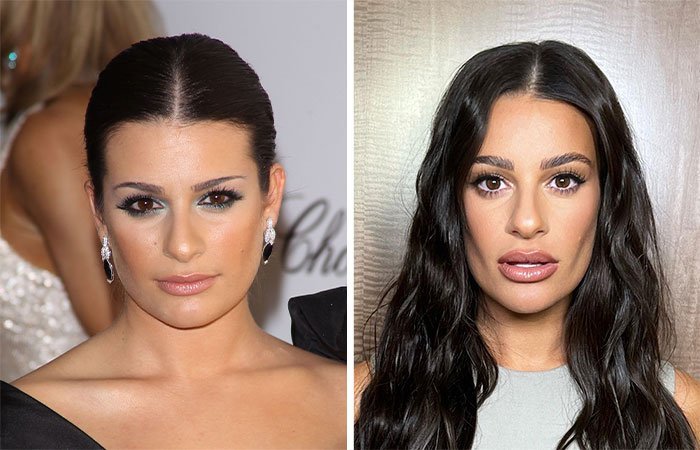 1 point
 -
VERY VERY LONG JUST AS A HEADS UP LOL. [Please do not post or repost anywhere. I am only posting here because of the strict measures the admins have made in an effort to stop the rampant marketing we’ve seen on other platforms. Your trust is appreciated!] Hi everyone, As promised, I wanted to do a write-up of my revision DES journey. I plan on updating it as often as possible and as frequently as possible to share my thoughts and provide transparency. For background, here is my full walkthrough of my journey with primary DES: (PLEASE READ AHEAD OF TIME) My consultation journey My current problem is this: Before DES, my monolids were more almond-shaped and elongated. After DES, my eyes became rounder and more “dolly.” The larger eye shape made my natural asymmetry more noticeable, but the DES lines themselves are also uneven. (One is higher than the other, and thicker) The eye he worked on longer is the one I’m more unhappy with: the scar/line is more obvious, the gap between the lid and crease is larger and more “sausage-y,” and the line droops downward. I’m also pragmatic about what is due to my natural anatomy. The eye I like has a more neutral tilt, so the crease ends parallel, while the other eye naturally tilts downward and the crease follows it. Because of this, I have to do my makeup differently on each eye. My goal: to lower the line while still ensuring my eyes still look big, keeping the in-out style, and evening the lines as much as possible. Ideally, I would want eyes that end neutrally or go slightly upwards, instead of having rounder, dolly eyes. (Im Bora, Irene from Red Velvet are my ideal eyes.) Based on my research, it seems like I would need to do ptosis correction again, incisional DES, and a double-line suture method. This means they try to unstick the adhesion points of the original line and connect them to the new line they make. This essentially creates two lines, but a skilled doctor can do their best to minimize this appearance and reduce scarring. There are a lot of revision DES doctors out there, but you want to make sure that you have doctors who have done similar cases as yours. For example, many people who do natural adhesion/nonincisional get revision because it loosens. This is still a much more straightforward fix than my situation. I did not bother to look at doctors who had more cases like this, who did not have as many patients with thick, fatty skin like mine. I also want to clarify that I am fluent in Korean and consulted mostly in Korean at all of these places, which is why I got (mostly) quoted lower prices than what you may see from other online reviews. For non-Korean-speaking patients, I expect that a similar case like mine may be around the 7 million won range. Based on my Gangnam Unni research, and my criteria, I narrowed it down to these clinics: Hyundai Aesthetics TS Idel Geunal (That Day) Finish Plastic Surgery I plan on getting in-person consults with all of them as well. I also did brief Kakao consults with the above, as well as Luho Marble Here is my consultation write-up: I consulted in Korean with all except for Marble and Luho. I also consulted with TS and Hyundai’s global team in English (as well as separately in Korean). This is because I realized that the Korean staff will not consult or provide any preliminary opinions and insist that you come in person. I realized that I needed to verify my own personal analysis with the opinions of the staff, and only the global teams are willing to consult. Luho As I mentioned, this is where I did my primary surgery. However, the chief doctor, Park Il, is quite well known for revision cases. I’m quite annoyed, actually, because they blew up internationally (I wonder if it was in part due to my review? haha) and the dynamic has changed. I did not really think about going back here, but I still wanted to get an opinion. I consulted with the global team, and they quoted me a whopping 8 million KRW for a fat transfer to my eyelids and incisional DES with line lowering. I did not really think about going back here, but I still wanted to get an opinion. I consulted with the global team, and they quoted me a whopping 8 million KRW for a fat transfer to my eyelids and incisional DES with line lowering. This price point is insane; I will just be straight up honest. On Gangnam Unni, you will not see anyone being quoted this high. They also told me I’d get 20% off if I booked my surgery date right now. Even after 20% off, I was so bewildered by this price gouging that I did not want to move forward. When I questioned why, they told me that this was because he’s the chief doctor and because he does not participate in any promotional events. I found this hard to believe, because I immediately saw a review on Gangnam Unni where a patient managed to book him and received event pricing. Marble I remembered last time Marble was thorough in my Kakao consultations and very kind. This was still the same. I guess they still had our chat history, as they greeted me warmly and asked me a lot of follow-up and clarifying questions, asking why I felt a certain way about my eyes and whatnot. They came back and even drew on my pics again to demonstrate their explanation. They said that due to the incisional method, there is always a risk that the eyes will look more “done” and the line will be “dark.” This is true; however, they also said that this can be reduced if I get my lines lowered. They also mentioned how my eyes just end differently, which is why one line curves downward while the other doesn’t. They said the width of the eye that bothers me (aka the one that's more sausage-y; I mentioned that there was a bigger distance) could either be due to ptosis or just how my eyelid forms, and can only be verified with an in-person consult. They were honest and said it’s probably unlikely that all of my concerns can be magically addressed, but it can be greatly improved and suggested incisional DES, ptosis correction, and line lowering, and said it would be 7.1 million before any promotions. Hyundai Aesthetics -- will be doing an in-person consult I had no idea that this clinic has been talked about for several years now in the international plastic surgery circles, to be honest. Usually, that does make me a bit wary, as I’m more hesitant towards clinics that aggressively market towards foreigners (is there a reputation among the local crowd that leads to this, etc), however, I really liked the results on Gangnam Unni and reached out. I consulted in Korean, and they provided very detailed, thoughtful responses. They said it’s not always the case that I would need to do incisional again just because I did it before (but I did not send any photos, and I’m pretty confident that I’ll need to do incisional, so this is just more for an FYI). They mentioned there’s usually availability 3 days after an in-person consult. I asked for pricing just on average for incisional revision DES + ptosis + line lowering using the double line method, and they said that if I agree to partial photos and a review, I’d qualify for event pricing starting at 1.95 million KRW. Truthfully speaking, based on my research, I expect this number to be closer to 4 million KRW once all the add-ons are included. TS Plastic Surgery -- will be doing an in-person consult To be honest, this was and is my top choice. They are extremely well known for being perhaps the clinic for revision DES, but it’s also known for being pricey (even for locals). However, my perspective is that I’m willing to pay a bit more as long as it’s not egregious, especially if it means I’ll be that much more satisfied. At the same time, they have started marketing more to the international market. The B/As were so good too, so initially I just wanted to go with them, but thought I should do more due diligence lol. One thing I didn’t like is how unfriendly the Kakao consultant was, though. They’re not necessarily unfriendly, but just to the point and a bit blunt. For example, they’re the only clinic that did not give me a quote and straight up said that it’s too difficult to give an average. (???) However, I know from reviews that it seems to be around 6.5 million KRW. I did manage to book a consult with the chief doctor, and they told me that there is a consultation fee of 20,000 won. They also told me that I don’t qualify for event pricing, but I’m not sure if it’s because I told them I’m American (they asked), or if it’s just because I asked for the chief director as the message was in the general confirmation that my consultation has been reserved. Idel Plastic Surgery -- will be doing an in-person consult I also liked this place’s B/As. They only have one doctor (the other is a dermatologist). They were pretty kind and very speedy in their responses. However, there was a bit of a back-and-forth as to getting the consultation booked because they told me that the doctor had a surgery on the date and time I was looking at and had to go to a conference after. I managed to book a slot, but it would only be for 30 minutes. I assume that’s pretty typical, but I’m kind of worried about whether there would be a long waiting period or if he’ll rush the process because he needs to go LOL. Would that be the case for the surgery too, you know? They said that there is a consultation fee of 20,000 won. They gave me a rough quote of 4-mid 5 million KRW for revision incisional DES + ptosis + line lowering via the double line method. I want to be clear that this isn’t what they suggested to me (I did not provide photos); it’s just what I’m assuming I’m most likely going to be suggested to do by most clinics. Geunal Plastic Surgery -- will be doing an in-person consult This place seems to be trying to grow internationally, but the head doctor is really famous already. Their website is broken! However, once again I liked their B/As, so I managed to add them on Kakao and reached out. They were SO fast in getting back to me, which I liked. Unfortunately, their consult will be the latest one, as they did not have time during the day I wanted to get a consultation. I’ll have to either push my potential surgery date to be after this consult, unless I find a place I like strongly enough. For here, it was mostly just making the consultation reservation. They said for line-lowering revisional DES, a rough estimate would start at around mid-3 million KRW. Finish Plastic Surgery -- will be doing an in-person consult This place is on the newer side, but the doctors have worked at another clinic before opening up their own. I have some hesitancy because of this, but I liked the results I saw on Gangnam Unni, so I consulted with them. I also appreciated how they seemed to be focusing on building up their local clientele. It seems like they’re a bit more well-known for noses, but I still wanted to at least get an in-person consult. They were very kind when I reached out to them. They told me that the approximate cost for revisional eye surgery starts at around 2.5 million KRW. Similarly, I expect this to be closer to 4 million or so, seeing how that’s around the average I’m seeing (for local pricing). They also refused to consult with photos over Kakao lol, but were very kind and told me that consults take around an hour to an hour and a half because they’re very detailed.1 point
-
I have been looking into dental and jaw options in Korea for corrective work. The EverM Dental Clinic comes up a lot so I thought I would ask about it here. I am not entirely sure if I am getting accurate information for it or not. Some things I read say it is a plastic surgery clinic while others say it is an OMFS (Oral and Maxillofacial Surgery) clinic. I am looking for, what I am assuming for the work I want, and OMFS.1 point
-
I would start with what work you want done. Figure that out and then find a clinic. If you are no sure, schedule something locally to get an idea of what you want. You don't need to book a surgery after a consultation.1 point
-
Hi everyone, I can't believe it's been a year since my last update. I plan on going to Korea this fall for revision DES. I will do another thorough write up about my experience and do some check ins. My nose is slightly crooked. To be honest, I can't remember if it was crooked before my nose job. I did go to an ENT a few years back in the States, and they mentioned I do have a deviated septum (which my doctor at Luho did not mention to me). However, this crookedness is very slight and is only something I notice if I look for it, if I'm in a certain angle, and so on. I have not experienced any complications, and I still am relatively satisfied with my nose. My eyes are still the exact position they were a year ago. I have to do my eyeliner a bit differently. To be honest, I'm not sure how much can be fixed with surgery. My eyes seem to just be tilted differently (one goes up, one is more neutral). However, I'd be happy if they evened out my lines and did something to make the lines look less dark, as it's really obvious to anyone who is in the plastic surgery community that I have gotten DES. Other surgeries/procedures I hope to have, though I need to figure it out: - some kind of mild lifting (debating Onda and InMode). I did InMode this year, and couldn't really tell at the time, but I think it did make a difference. I did bruise, but I was able to cover it up completely with makeup. - something to do with my worsening smile lines, but I'm not sure what yet, as I'm opposed to filler in that area. I'm debating juvelook. - perhaps touching up on my chin filler (got it in January, makes a huge difference). - removing a sun spot and some moles - really debating getting lip filler. I'm opposed to it due to the high rate of migration, but my philtrum has gotten a lot longer and I don't like my gummy smile. - masseter botox touch up - facial contouring fat injection (magic CAT injection) Once again, I do think I've gotten prettier, but I think now my face is a bit disharmonious if that makes sense. My nose is prominent (since I went from no bridge to having a bridge), and I have strong, dolly eyes (due to once again high, visible, dark crease), but overall rounder, softer features. I will keep everyone updated!1 point
-
Hi everyone. I am on the hunt to a clinic/doctor that can do some work for me. I don't want to get surgery that looks like I had surgery. I am sure you have seen the look/trend, it is happening everywhere where all these women are looking to same! No, I want something that will enhance my natural structure and correct a few issues. I was told to look in Seoul but I am having a hard time narrowing down the better clinics because they all appear to do similar work and have similar phrasing, reviews, etc. online. I want some recommendations so I can start e-mailing some of these clinics to get more information. Any help is useful, thanks!1 point
-
This is true! I have looked at several different clinics for other things and I can tell you from what I have seen, most of them if not all of the ones I looked at have non-surgical treatments. I think they know not everyone is ready to go under the knife for their first time. It is almost like a gateway to getting surgeries. Pop PS for example focuses on surgeries but they also offer anti-aging options that are non-surgical. Another one you would not expect is EverM Dental, but I am not sure if they still offer anything or not. I just saw some various non-surgical mentions for jaw correction on Reddit a few years ago.1 point
-
Realistic breast implants tend to come at a higher price point as they use higher-quality implants and surgical styles. Saline implants are the most affordable option which will run you around $3,500–$4,500, and the more premium options like Motiva or Gummy Bear implants can cost $7,000–$15,000, sometimes more. This cost is still lower than other places like the US, usually 30% cheaper but can be as much as 50% cheaper with certain clinics.1 point
-
Maybe try again from another e-mail? Or another account if you are using international calling/contacts?1 point
-
I view clinics like this to be half and half. Like @LupinBB81 mentioned, they do corrective surgery so it isn't just about atheistic.1 point
-
I am not familiar with Pride but I do know that Note Plastic Surgery is a popular choice. If you go on Reddit, you might be able to find some before and afters that women share of their breast work tied to the clinic.1 point
-
Start with verifying credentials through official networks like the Korean Association of Plastic Surgeons (KAPS) or the Korean Society of Plastic and Reconstructive Surgeons (KSPRS), making sure the doctor is a certified specialist rather than a general practitioner. Use international platforms (RealSelf, the American Society of Plastic Surgeons (ASPS) directory) and medical tourism agencies like Docfinderkorea to compare board-certified surgeons, read patient reviews, and view before-and-after galleries. You can also research clinics located in major districts like Gangnam, Apgujeong, and Sinsa in Seoul, while cross-referencing local Korean review platforms like Naver and Babitalk for real patient experiences.1 point
-
It is an OMFS. The way you can tell this is based on what they offer. A big portion of their work is jaw correction. This includes things like fixing overbites via surgery. Standard plastic surgery is 100% cosmetic where these types of surgeries are both cosmetic and mechanical corrections.1 point
-
I feel like every modernized clinic at this point has non surgical options. What work are you looking into getting? have you decided?1 point
-
I was just reading about them. I have never heard of this before and I don't see it being offered anywhere locally. I am wondering if this is something new and trendy or if it is called something else depending on where you go? It looks interesting.1 point
-
I have been in touch with the doctor from zero one ps, had a few back and forth sessions and conversations. I have a better idea of pricing and surgery details now. I am still on the fence so I also am reaching out to another clinic I came across on here, pride ps. I have not heard back from them yet however. I am not sure why. It has been almost 2 weeks1 point
-
I have come across a few that focus a bit more on it, vava ps is one. The thing is though, they seem to be a bit like a trendy clinic that focuses more so on what everyone is looking for with nose, eyes, and lifting. They don't appear to be a facial bone clinic like some other places. I don't know how much work you need done to enhance your profile but you might need a more specialized doctor.1 point
-
Yup, it is a newer trend. It could be why you haven't seen it locally yet. It is a restorative and regenerative treatment so when looking around, look for those sorts of treatments to help narrow down which clinics offer it. Stem cell therapy as a whole has been around for awhile but when it comes to skin work and application, it is still fairly new but considered mostly safe.1 point
-
I agree! I do wonder how often some of these clinics do deal with non-Korean patients. I am sure it is some more than others.1 point
-
A lot of people don't know about it, you aren't alone! Just look into it more. It is a pretty neat cosmetic procedure.1 point
-
I am realizing that! I for sure what the trip to be enjoyable. It makes everything a lot less stressful. I appreciate the kind works and honest thoughts. I don't feel like anyone here is pressuring me into anything1 point
-
Oh okay, I didn't think to check on that. I guess it makes sense a collective of people on an open board will find stuff and share it. Is there a place on here for known scams by chance?1 point
-
I am shocked with a name like kpopkelly you don't know! haha It refers to the high-end and sophisticated style associated with the Apgujeong-dong neighborhood in Seoul, South Korea.1 point
-
I have heard of it but never knew it had a name for it. This is something I am going to keep in mind, thanks for the information!1 point
-
This isn't always true. Some surgeons don't do lipo, breast implants, etc. I think most that focus on the face only work on the face, at least based on my research.1 point
-
This is for sure a smaller clinic though, that is something to keep in mind. Also, zero1 ps tends to focus on nose and eye work. They do offer grafting but it may not be a specialty, it would have to be something that needs to be looked into more. Things get lost in translation online.1 point
-
Well, just take your time. Do not rush if you feel like it is something you can't manage. You not only want your surgery to be a success but you want to enjoy your trip to Korea. Traveling is one thing, but you will be traveling for medical purposes too.1 point
-
Outside of zero1, note plastic surgery is another one that has a strong focus on nose work. I am always seeing both of them mentioned. It is always a good idea to do research and never feel afraid to reach out to these clinics with any questions or concerns. They deal with international patients all the time.1 point
-
There are a lot of options for nose work in Korea, like an insane amount. So it can be overwhelming when you are not used to trying to navigate the space. I would start with clinics like zero1 ps that get high rates of credibility from people online. Even if you decide not to work with them, you can still get general information from the clinic and get a feel for what you want out of a doctor/clinic.1 point
-
That is actually a massive relief. I did see some videos where people went and documented their experiences and you are right, no one seemed to care at all. They seem to be brutally honest though when it comes to some things but getting work done is so normal there, people think nothing of it.1 point
-
I didn't know they actually use threads! That is interesting. I will have to see if I can find a video of it being done. Now I am curious. It sounds like a great option for younger people looking to get minimal work done.1 point
-
They do! I found some. I don't know how accurate they are for planning purposes. I would imagine no long range outlooks are perfect. I have tried using local ones before for gardening and they were a bit off.1 point
-
Happy to hear! I did see you on there but I wasn't 100% sure if it was you cause your name was different but now I know. Glad it is helping you out.1 point
-
I am still in the process of looking. I have found a few clinics that seemed promising but when I got in touch, they didn't know much English and I did not feel comfortable booking anything with them. Very friendly and everything, I just don't want to have to worry about words being crossed or something.1 point
-
People get information wrong online all the time. It is very easy to find groups of people posting the same incorrect information. This is why you have to research and why it is great places like this exist so people can correct each other.1 point
-
This is actually very common. A lot of people will seek out non-surgical options first which works great for some but not for everyone. It depends on your age and what you want to see improved. I think it is better for people under 35 to explore these options but for middle-age and older, surgery is often needed for lasting results.1 point
-
Specifically with the KSPRS. There are a few other boards as well but this is the top one so I always look into this and check. I have found a number of clinics that were not certified with them.1 point
-
Yes, I did join. Thanks. It has been helpful. Is this true? Wouldn't a doctor have mentioned this to me? I thought skin work was just about pulling it back and/or trimming it. Yes, it will eventually sag again but it gives you a number of years where it doesn't.1 point
-
There are other clinics as well. This is just one example. I figured I would share at least one so everyone reading the thread can get an idea of what to look for when it comes to non-surgical options in Korea. There are a fair bit of them but some of these services are within actual surgery clinics themselves too.1 point